Get a money figure for what failed deliveries cost you each month — in under 2 minutes.
You don't know if returned orders are a small problem or eating your profit.
No customer data needed. Just three numbers from your store.Open module →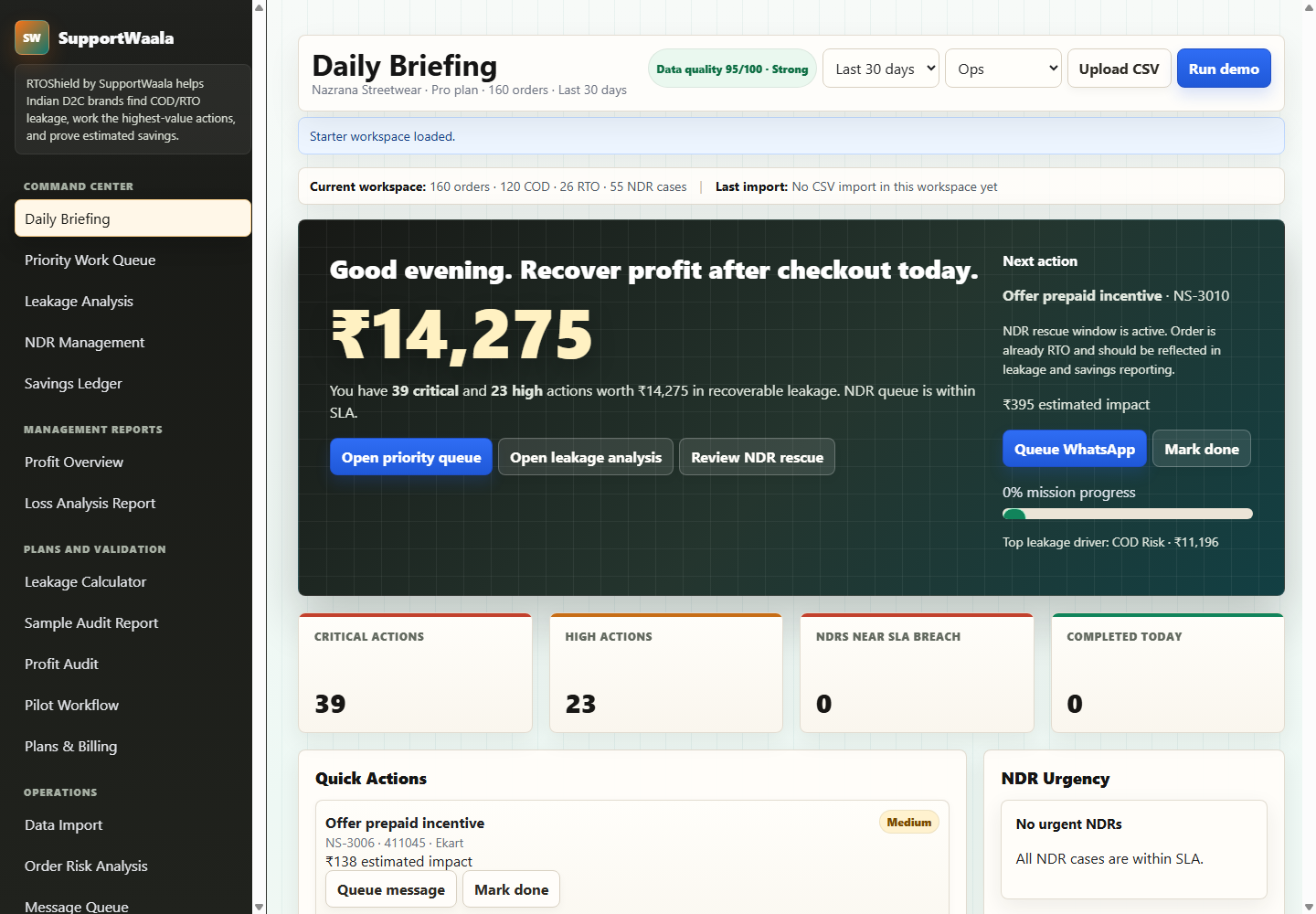
Wembro turns scattered courier exports and spreadsheets into one calm operating room — with a clear next action and a savings ledger.
Modular by design — but the experience stays coherent because each piece exists for a reason.
You don't know if returned orders are a small problem or eating your profit.
No customer data needed. Just three numbers from your store.Open module →Failed-delivery losses hide across couriers, pincodes, products, and ad campaigns.
A clear written report with the top fixes, ranked by what they save you.Open module →Knowing the problem isn't the same as fixing it.
Daily action log, savings tracker, and a final report you can show your founder.Open module →Your ops team scrolls through endless order tables and misses the ones that matter.
Work queue, leakage map, NDR rescue, and a savings ledger you can audit.Open module →Founders get screenshots and exports, not decisions.
Executive summary, policy simulator, monthly strategy review.Open module →Teams can't act on numbers they don't understand.
In-product glossary, training tracks, and worked examples.Open module →Type in three numbers from your store. See your monthly loss in rupees, no upload required.
We rank what to fix first — risky cash orders, failed deliveries, bad addresses, or weak couriers.
Your team gets one clear action at a time, with the reason, urgency, and rupees at stake.
Track every save, separating estimated value from money you've actually kept.
The dashboard leads with the money at risk and the action to take. Tables, rules, logs, and setup stay behind clear drill-downs.
Daily Profit Briefing — not another generic dashboard
Priority Work Queue — one action at a time
Leakage Map — opens the exact workflow behind each driver
Savings Ledger — verified saves, not vanity numbers
Founder Reports — decisions, not screenshots